
Jesús Mari Lazkano
“Bilbao is very attractive from an architectural point of view”

SOUL
July 2026
Jesús Mari Lazkano (Bergara, 1960) lives and works in Busturia, in the heart of Urdaibai. He knows Bilbao well, having lived there for decades and still visiting regularly. He is one of the leading figures in contemporary realist painting in the Basque Country.
His work has been showcased in major solo exhibitions at internationally renowned venues, notably at the Guggenheim Bilbao (2007) and in a major exhibition at the Bilbao Fine Arts Museum (2010). He has shown his work in galleries and at art fairs in cities such as Rome, Dallas, Jakarta, New York and Beijing.
He also took part in the prestigious Smithsonian Folklife Festival in Washington (2016) with his installation Two Worlds.
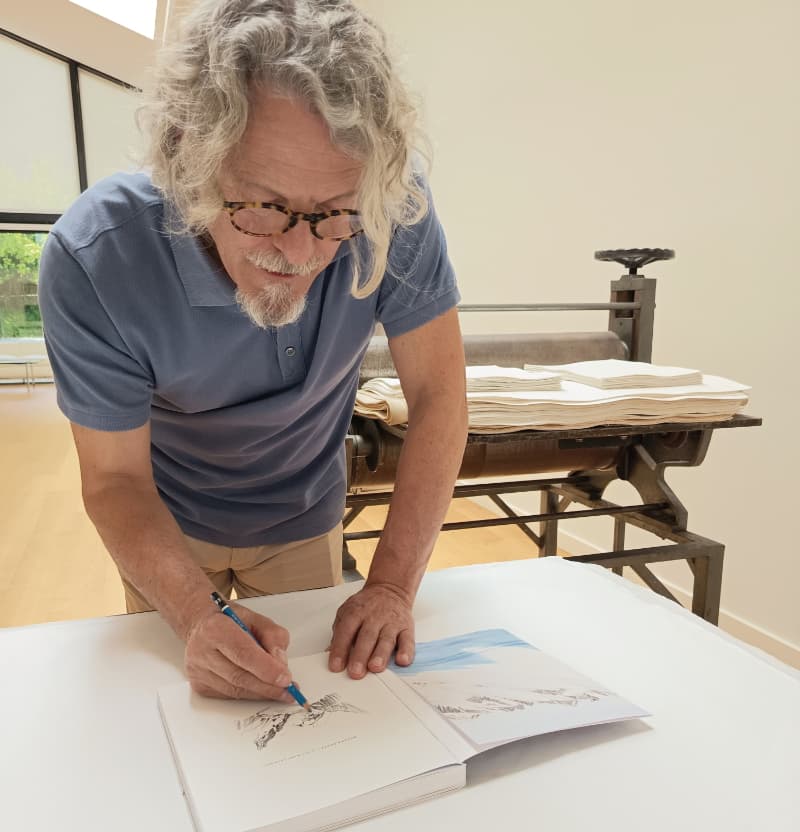
Sitting in his studio, Lazkano clearly recalls the contrast between Bilbao in the 1970s and the city today. “Bilbao was closely linked to its industrial activity; it was a sort of giant machine. Now it has returned to the idea of nature,” he notes. He specifically mentions how Artxanda is reflected ever more clearly in the waters of the estuary. “The city is so much more pleasant today.”
According to the artist, “Bilbao, regardless of the phenomenon that the Guggenheim has represented, has turned its attention to the estuary and reclaimed a natural feature for the city that has improved the quality of life a hundredfold”. He attributes the change to “comprehensive, forward-thinking planning”. He highlights the importance of essential yet hidden infrastructure, such as the water supply and sewerage systems and the Metro.
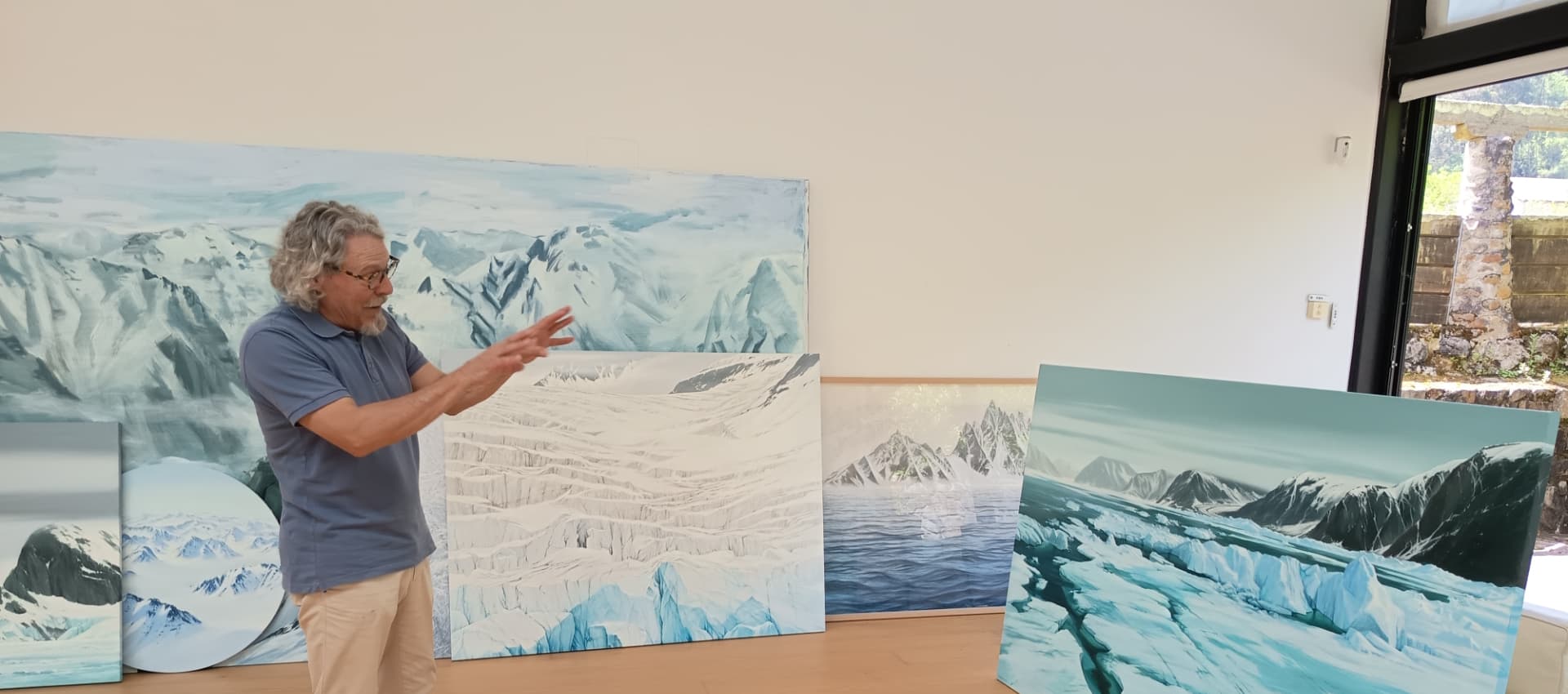
“Bilbao, regardless of the phenomenon that the Guggenheim has represented, has turned its attention to the estuary”
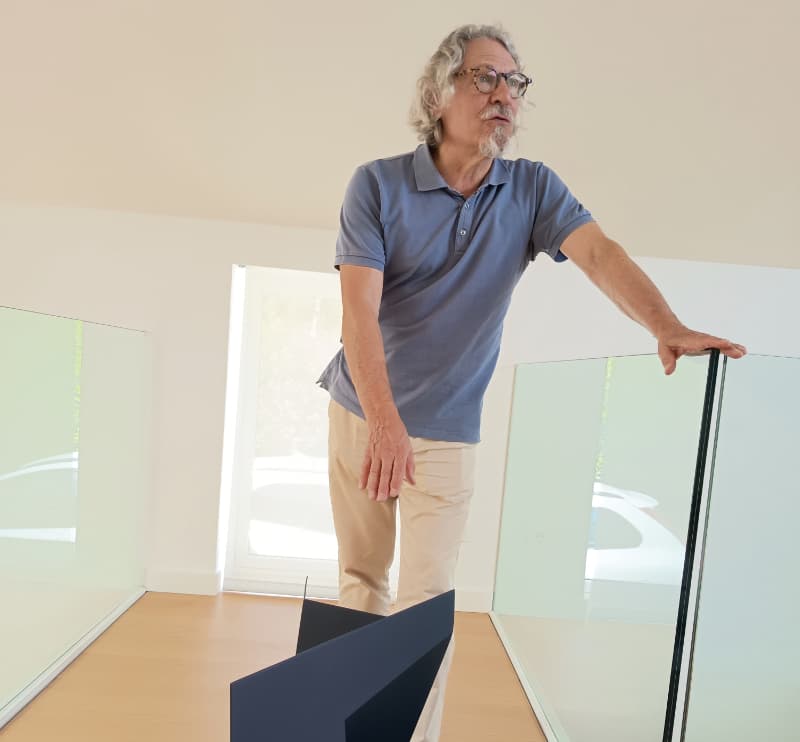
The artist highlights the “rationalist architecture” visible in many buildings and emphasises the importance of the “finishing touches” on classical buildings. He singles out the Hermes statue at the Banco de Bilbao on the corner of Gran Vía and Mazarredo, a large-scale copy of a sculpture by Jean Bolonia that fascinates him.
Having spent decades observing the city both as an artist and a teacher, Lazkano believes that Bilbao’s evolution represents a multifaceted achievement.
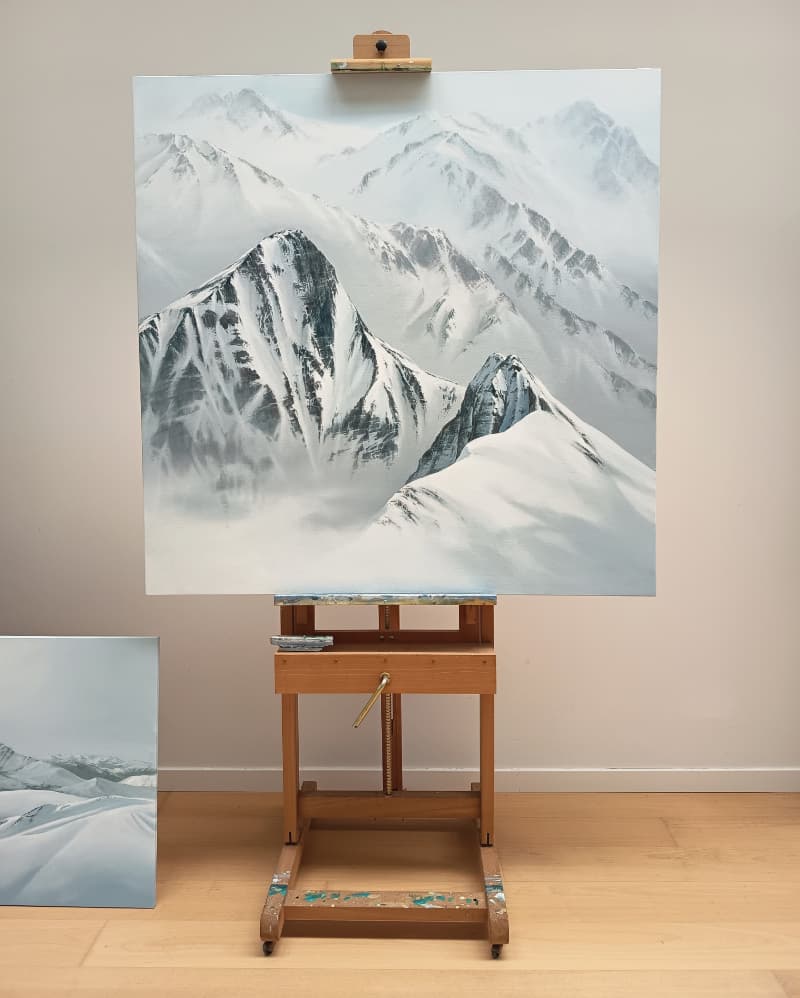
The artist, who is now focused on capturing on canvas how ice “is disappearing as a result of the environmental tragedy”, feels that it would be particularly interesting for him to paint “the water of the estuary” at this time.
LA MUGA
RESTAURANT
Dishes to share, including vegetarian, vegan, and gluten-free options. Eleven beer taps—four of them featuring craft beers—plus local, national, and international bottled beers.

VICTOR – 1940
RESTAURANT
The one of all the life, in the Plaza Nueva of Bilbao.
Familiar treatment with our traditional specialties. Warehouse with more than 1,200 references. Homemade desserts.
You may be interested…
Carré d’artistes Opens in Bilbao
Democratizing Contemporary Art
Bilbao reopens two museums
Euskal Museoa & Museo de Bellas Artes
The Carlton Hotel turns one hundred
It opened on September 20, 1926